
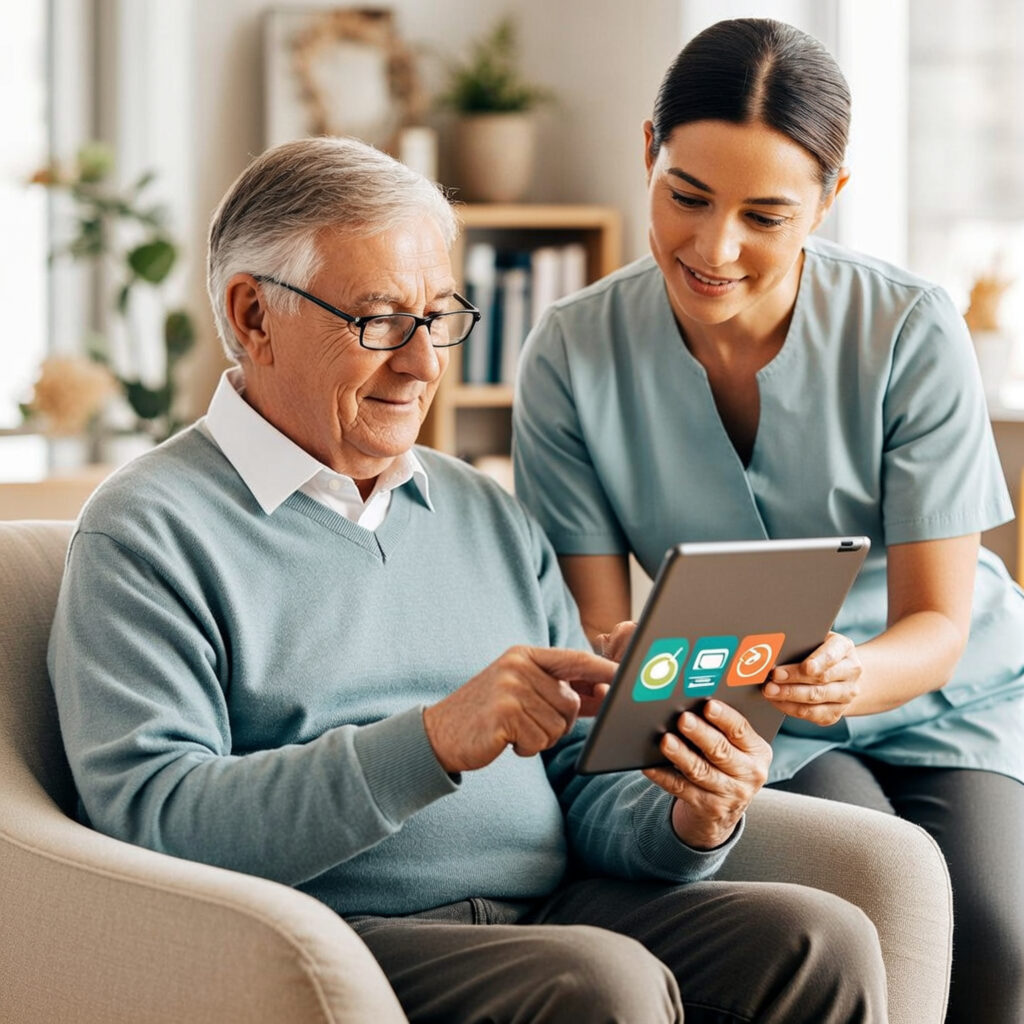
As families grow more geographically dispersed and seniors increasingly choose to age at home, technology has become a powerful tool for supporting safe and connected senior care. Modern digital tools now allow families, caregivers, and healthcare professionals to stay informed about a senior’s health, safety, and daily well-being even when they cannot be physically present.
In 2026, innovations in AI, remote monitoring, telehealth, and smart home devices are transforming how families support aging loved ones. These technologies are designed not only to improve safety but also to strengthen communication and independence for seniors.
Below are key technologies shaping senior care today and how families can use them safely and effectively.
Remote Health Monitoring Systems
One of the most significant developments in senior care technology is remote patient monitoring (RPM). These systems use wearable sensors or connected medical devices to track important health data such as heart rate, blood pressure, oxygen levels, and activity patterns. The data is securely shared with caregivers or healthcare providers in real time.
This technology helps doctors detect early warning signs before a health condition becomes serious. For example, unusual changes in heart rate or physical activity can alert caregivers that medical attention may be needed.
Remote monitoring also reduces unnecessary hospital visits because doctors can monitor chronic conditions from a distance and make adjustments to treatment plans quickly.
Smart Medical Alert and Fall Detection Devices
Falls are one of the most common risks for older adults. Modern fall detection systems now use advanced motion sensors and artificial intelligence to detect real falls and automatically notify caregivers or emergency services.
Unlike earlier devices that relied only on emergency buttons, many new systems automatically detect unusual movements and send alerts even if the senior cannot press a button. Some devices also include GPS tracking to help locate seniors if they become disoriented.
These technologies give seniors confidence to remain active while providing peace of mind for family members.
Smart Medication Management Tools
Medication errors are a common concern for seniors who take multiple prescriptions. Smart medication dispensers and reminder systems are designed to prevent missed or incorrect doses.
These devices release the correct medication at scheduled times and provide alerts through audio, visual notifications, or smartphone apps. Some systems also notify caregivers if a dose is missed.
In 2026, many of these systems integrate with digital health platforms, allowing pharmacists and healthcare providers to track medication adherence and adjust prescriptions when needed.
Telehealth and Virtual Care Platforms
Telehealth has expanded rapidly in recent years and continues to grow in 2026. Through secure video calls and connected medical devices, seniors can now consult with doctors, nurses, and specialists without leaving their homes.
Devices such as digital blood pressure monitors, glucose meters, and smart scales automatically upload health data to telehealth platforms. This allows healthcare providers to monitor conditions remotely and offer personalized advice.
Telehealth is especially beneficial for seniors with mobility challenges or those living in areas where healthcare facilities are far away.
Smart Home Technology for Safety
Smart home systems are increasingly being used to support aging in place. Motion sensors, smart lighting, and environmental monitoring devices help create a safer living environment.
For example, smart lighting systems can automatically turn on when motion is detected during nighttime hours, reducing the risk of falls. AI-powered sensors can also detect unusual patterns such as inactivity or sudden movement, sending alerts to caregivers if something appears wrong.
Other smart devices monitor environmental hazards such as smoke, gas leaks, or carbon monoxide, ensuring quick response during emergencies.
AI Companions and Social Technology
Social isolation can be a serious concern for seniors, especially those who live alone. New technologies are emerging to address this challenge.
AI-powered companion devices such as ElliQ AI Companion Robot are designed to interact with seniors through voice conversations, reminders, and daily engagement activities. These devices can encourage healthy routines, suggest activities, and help seniors stay connected with family members through video communication.
Studies from recent programs have shown that these companion technologies can significantly reduce feelings of loneliness and improve overall well-being for seniors living independently.
Smart Mobility and Assistive Devices
Mobility support technology has also evolved in recent years. Smart walkers, rollators, and electric wheelchairs now include sensors that detect obstacles, track location, and monitor walking patterns.
Some devices include GPS tracking, fall detection, and adjustable support systems designed for long-term comfort. These innovations help seniors move safely both inside and outside the home while allowing caregivers to monitor mobility remotely.
In 2026, some advanced systems even integrate with smartphone apps so caregivers can receive alerts if mobility patterns change significantly.
Ensuring Safe Use of Technology
While technology offers many benefits, it should always be used responsibly and securely. Families should ensure that devices are configured with proper privacy settings and secure data protection. Many modern systems include encryption and privacy controls that allow seniors to decide what information is shared and with whom.
It is also important to provide guidance and training so seniors feel comfortable using these tools. Simple interfaces, voice commands, and automated systems are making technology more accessible for older adults.
The Future of Connected Senior Care
Technology is rapidly transforming senior care by making it easier for families, caregivers, and healthcare professionals to stay connected. Innovations in artificial intelligence, wearable devices, telehealth, and smart home systems are helping seniors live safer, healthier, and more independent lives.
For families, these tools provide reassurance that aging loved ones are supported even when they cannot be physically present. By combining technology with compassionate caregiving, it is possible to create a care environment that protects both safety and independence.
As these technologies continue to evolve, they will play an even greater role in supporting aging populations around the world. Families who understand and adopt these tools can help ensure that seniors remain connected, protected, and empowered in their daily lives.
Legal Disclaimer:
This post is strictly for educational use and should not be construed as professional advice (medical, legal, financial, or otherwise).